

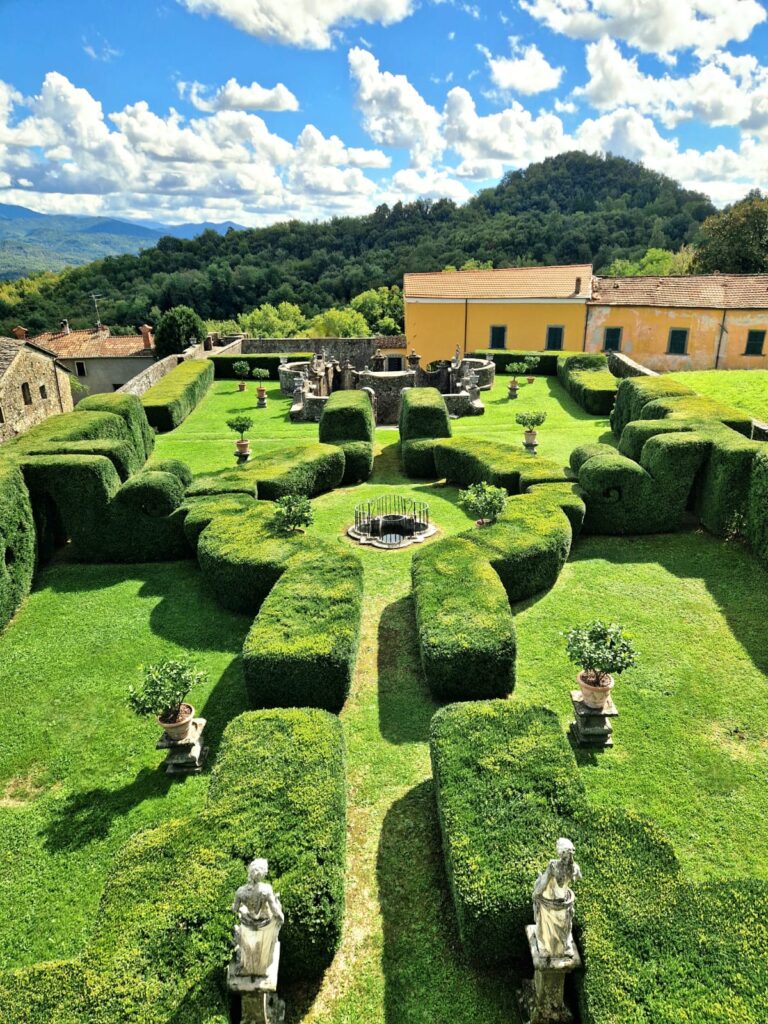
The Villa Pavesi Negri Baldini is a Baroque architectural gem located in the small village of Scorano, on the slopes of Mount Codolo, near Pontremoli (MS). The structure stands out for its simplicity and functionality, in contrast to the scenographic elegance of the Baroque garden attributed to the architect Giovanni Battista Natali. This green space is a true natural theater, with nymphaeums, fountains, mythological statues, and artistically shaped hedges.
The complex, now owned by the Baldini family, represents a perfect balance between nature and architecture, a splendid example of 18th-century style carefully preserved over time.
The history of Villa Pavesi Negri Baldini in Scorano is closely tied to the families that have cared for its ownership and preservation over time. Originally owned by the Castellini family since the 15th century, the villa was transformed in the 18th century by the brothers Paolo, Francesco, and Giuseppe Pavesi, wealthy merchants involved in commercial activities. In 1811, the property passed to the Corradi family, who maintained it until the early 20th century. Later, between 1920 and 1930, it became the property of the Betta family. Since 1930, the villa has been in the hands of the Baldini family, who, starting in 1950 with Luigi Baldini and his son Andrea, have ensured constant maintenance and enhancement, preserving the villa and its magnificent Baroque garden. This family continuity has helped preserve the historical and artistic charm of the place.
Quote from Xavier Salmon, Director of the Department of Graphic Arts at the Louvre Museum:
“The Garden in Scorano is a little gem worth preserving.”
The Garden
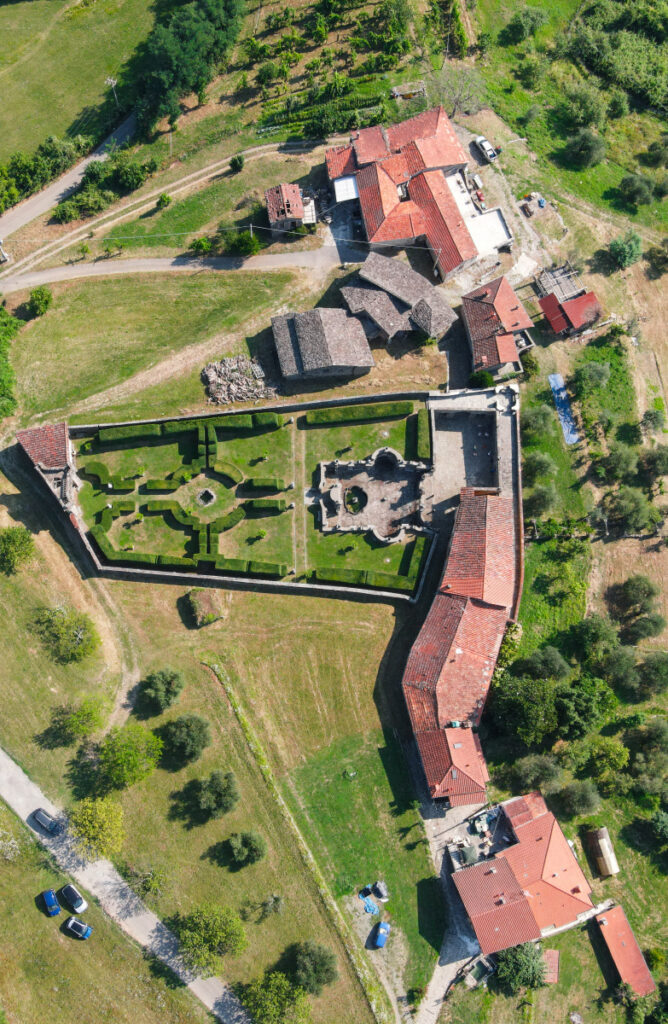
The garden of Villa Pavesi Negri Baldini in Scorano is an extraordinary example of a Baroque garden, representing one of the greatest green scenographic designs in the Pontremolese area.
Designed and created in the first half of the 18th century, probably by Giovanni Battista Natali, it stands out for its compositional complexity and its ability to harmoniously blend nature and artifice.
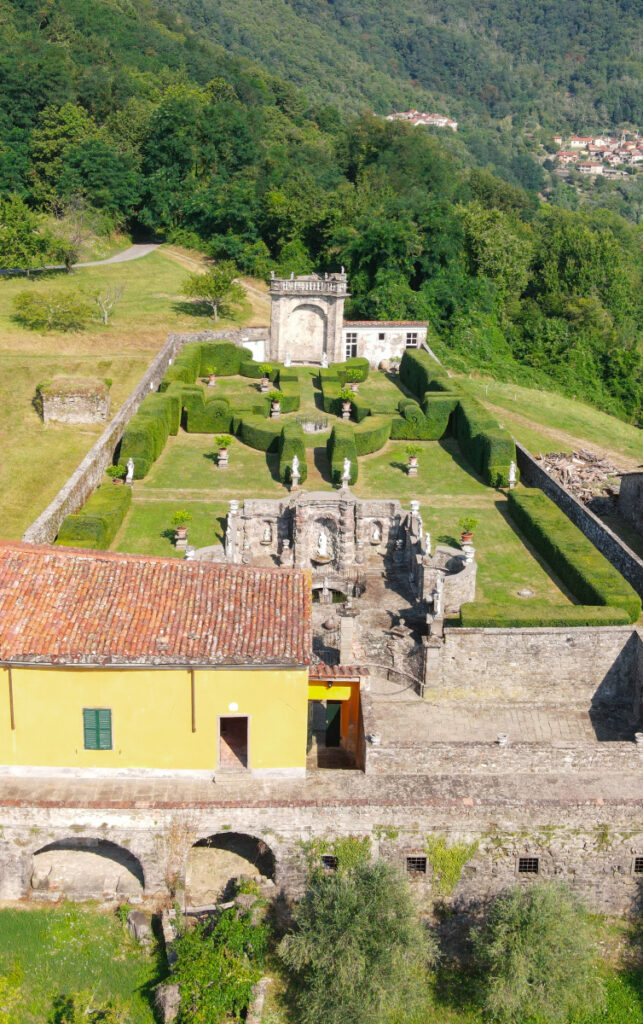
The entrance to the garden is through a courtyard that acts as a bridge between the villa, the village, and the green area. Upon passing through an elegant wrought iron gate, the viewer is greeted by the nymphaeum, a small and mysterious space adorned with mythological statues and water features.
The nymphaeum features a small grotto and a fountain with the figure of Neptune, marking the first perspective backdrop of the garden.
A winding staircase leads to the second level, which opens into a large quadrangular space bordered by walls and balustrades, adorned with carefully pruned boxwood hedges shaped into geometric and scenographic forms.
In the background of the second level, the view opens towards the forested and wild mountain on one side, and towards the vast basin of Pontremoli dominated by the Apennines on the other, creating a striking contrast between the natural landscape and the landscaped garden.
The most scenographic part of the garden is completed by a building that serves as a backdrop, originally decorated with painted perspective views typical of Baroque Pontremoli and probably the work of Antonio Contestabili.
The garden still reveals a secret: a small hidden spiral staircase leads to the belvedere, a panoramic point adorned with small marble putti. This observation point offers a complete view of the garden’s design.
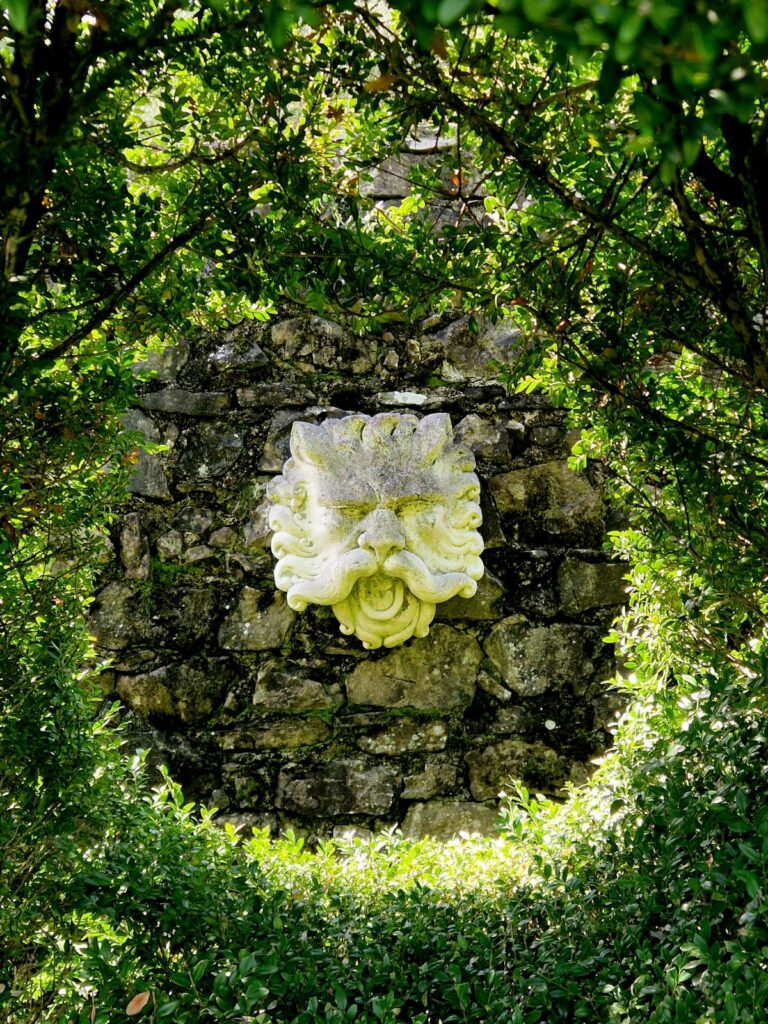
The “Giardino dei riccioli” (Garden of Curls) is a place where time seems suspended, thanks to the extraordinary preservation of the original elements and the skilled management of the greenery, which ensures the maintenance of the Baroque forms and atmospheres.
Visiting this place means immersing oneself in a world where art, history, and nature intertwine to create a unique experience, a “locus amoenus” that celebrates the meeting between man and nature according to the aesthetic principles of the 18th century.
“But the real surprise comes when you climb the stairs and encounter the Giardino dei Riccioli. And if it is true that it takes a man to make a kingdom, after visiting Scorano we will discover that it takes a curl to make a garden.”
(Francesca Marzotto Caotorta – Gardenia)
The meticulous care with which the Baldini family has maintained and restored the garden has allowed for the preservation of this precious cultural and botanical heritage, offering guests the opportunity to discover a corner of history and beauty that still inspires and moves today.
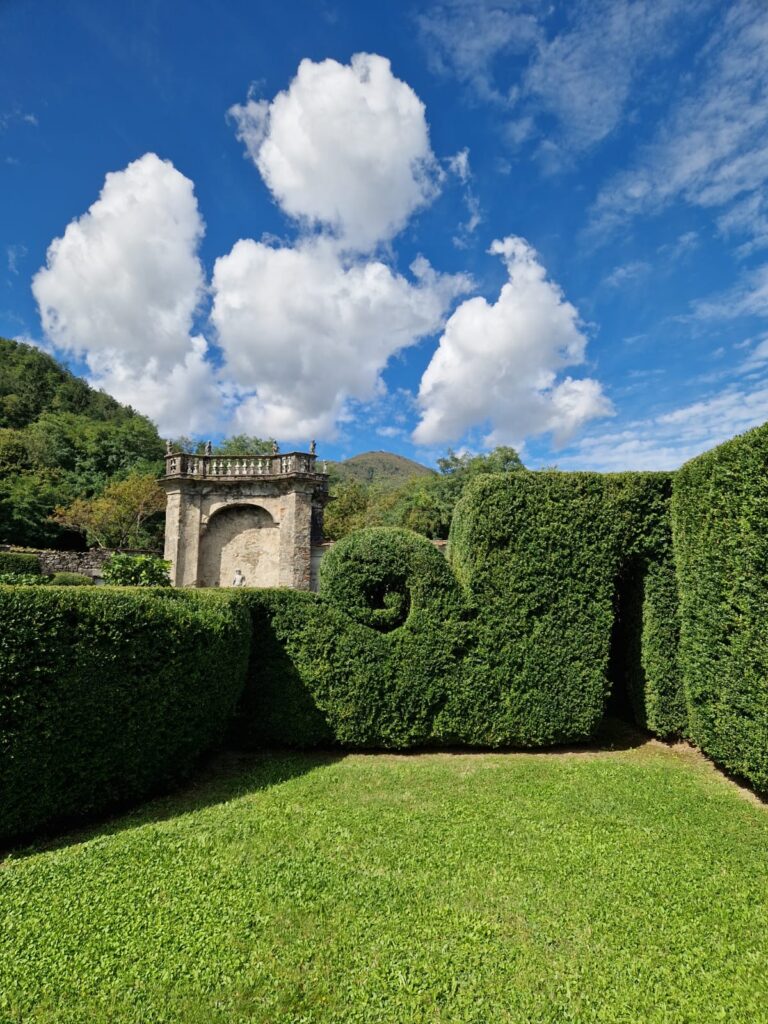
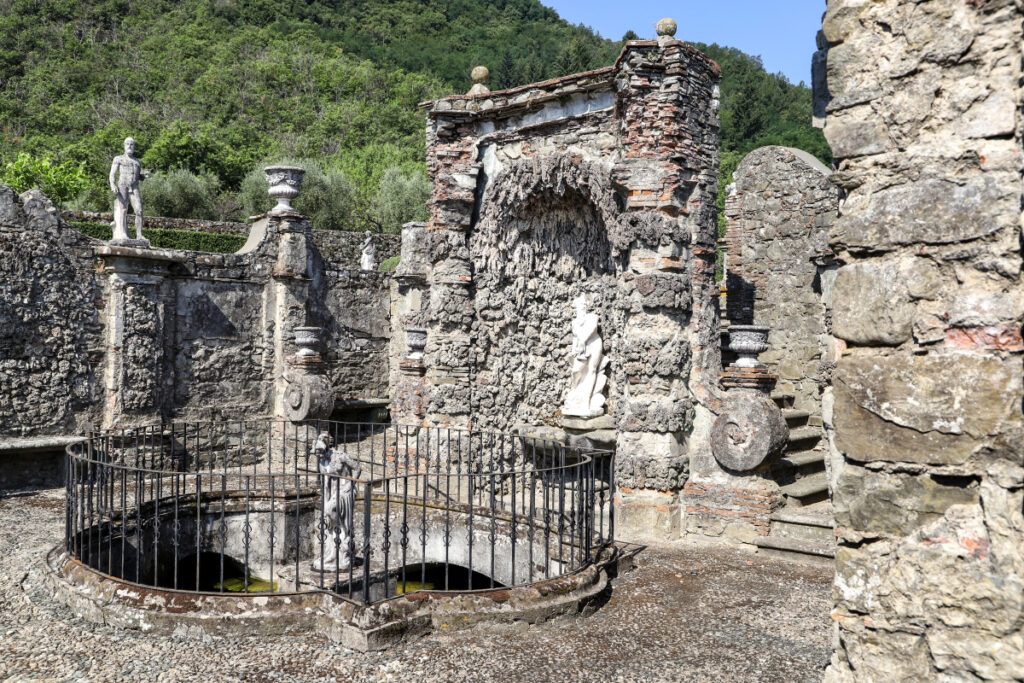
View of the Nymphaeum

Bibliography
- A.Baldini, La villa Pavesi Negri di Scorano, in «Almanacco Pontremolese 1995» Centro Lunigianese di Studi Giuridici, Anno XVII, Pontremoli 1995.
- C. Lattanzi, Città Barocca: i Giardini di Palazzi e di Ville, in “Polis. Idee nella città”, anno II, n. 5, marzo 1996, pp. 24- 28,
- C. Rocca – S. Lanzardo, Ville storiche di Massa Carrara, ed. Cassa di Risparmio di Lucca, Pontedera, 1997,
- C. Lattanzi, Catalogo del Convegno, Artifici d’acqua e Giardini. La cultura delle grotte e dei ninfei in Italia e in Europa, Schede sui ninfei del Palazzo Ducale di Massa e del Giardino della Villa Pavesi Negri, oggi Baldini, a Scorano di Pontremoli, Pacini, Lucca 1998,
- AA.VV., Giardini di Toscana, Regione Toscana, Edifir, Firenze, 2001,
- Ville della Lunigiana Storica, a cura di Gian Luigi Maffei, fotografie di Andrea Botto, ed. Cassa di Risparmio di Carrara e Fondazione Cassa di Risparmio di Carrara, Parma, 2005. Nel volume è contenuto anche lo scritto di A. Marmori, Il giardino murato.
- F. Marzotto Caotorta, Il giardino dei riccioli, in «Gardenia» n. 356, Dicembre 2013, con foto di Dario Fusaro.
“The complex of the villa was awarded a Certificate of Merit on 26/10/2013 in the competition La fabbrica nel paesaggio(The Factory in the Landscape), organized by the Club Unesco Foligno and Valle del Clitunno and the Italian Federation of Clubs and Unesco Centers, with the following motivation:
‘Certificate of Merit to Andrea Baldini for the Borgo di Scorano, whose restoration has achieved a perfect balance between man and nature in a rural setting dedicated to agriculture, but also a land of art and culture.’
Map

How to Get There
Scorano is about 6 km from the Pontremoli motorway exit. From here, take the SP31 towards the town center, pass two roundabouts, then turn left and left again towards Scorano. In Pontremoli, about 4 km away, there is a train station and a bus station.
Guided Tours
It is possible to visit the Giardino dei Riccioli with guides from Sigeric, by reservation, throughout all seasons of the year.

Info & Contacts
For any information on how to visit the Villa, you can contact Sigeric – Tourism Services
Tuscany Community Cooperative
Travel Agency and Tour Operator

Centro Produzione Didattica Sorano SS62, Pieve di Sorano – 54023 – Filattiera – MS
Phone:
+39 331 8866241
+39 366 3712808
Email: info@sigeric.it
Website: www.sigeric.it